
Choosing the Right Seagate IronWolf NAS Drive: 10TB vs 8TB
When building a NAS setup, selecting the right hard drive is crucial for performance and reliability. The Seagate IronWolf 10TB and 8TB models, both designed for NAS usage, offer different capacities and speeds that can significantly affect your storage experience. This comparison will help you decide which model best suits your needs based on storage requirements, performance, and budget considerations.
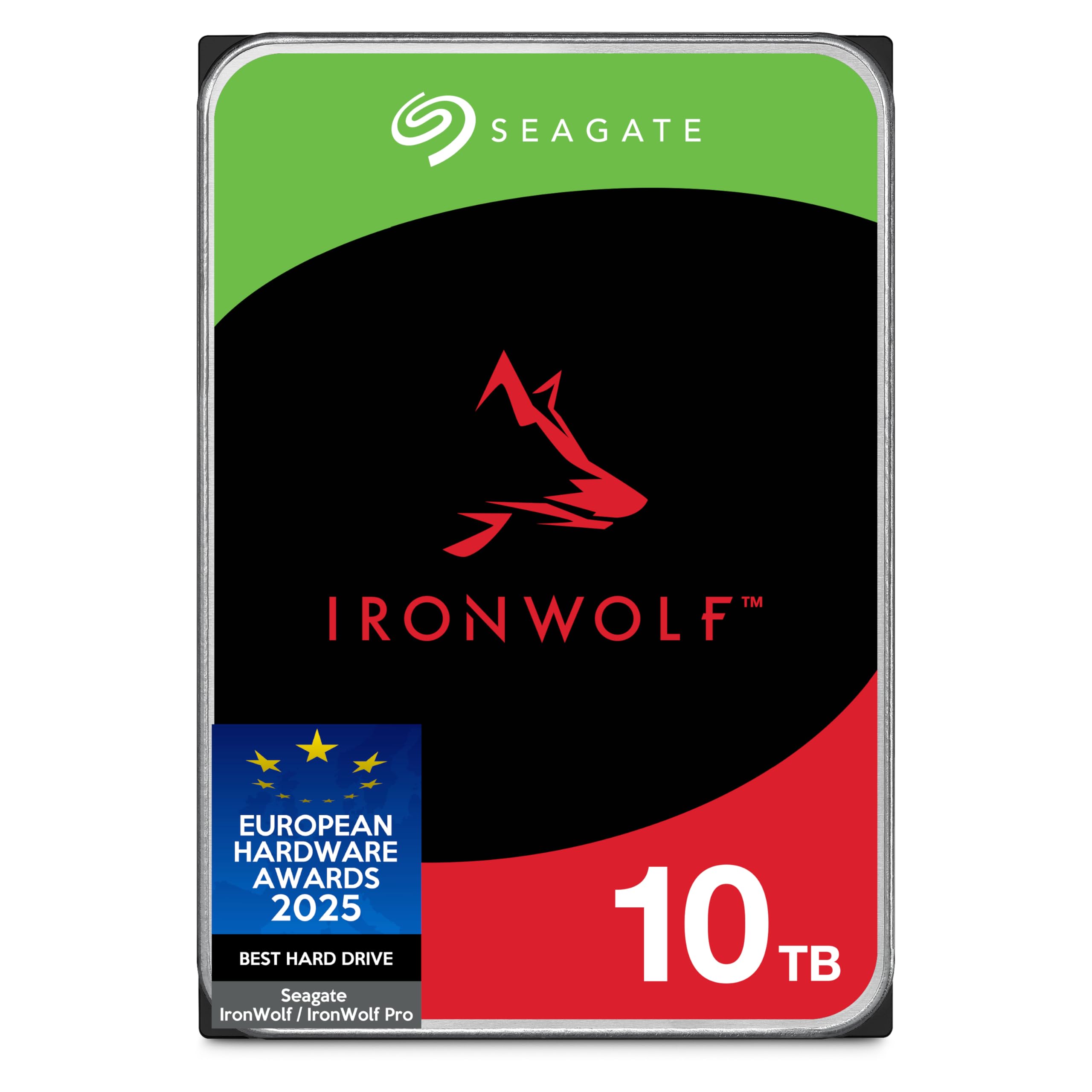
Seagate IronWolf 10TB, NAS, Internal Hard Drive, CMR, 3.5 Inch, SATA, 6GB/s, 7.200 RPM, 256MB Cache, for RAID Network Attached Storage, Data Rescue Services, FFP (ST10000VNZ00)
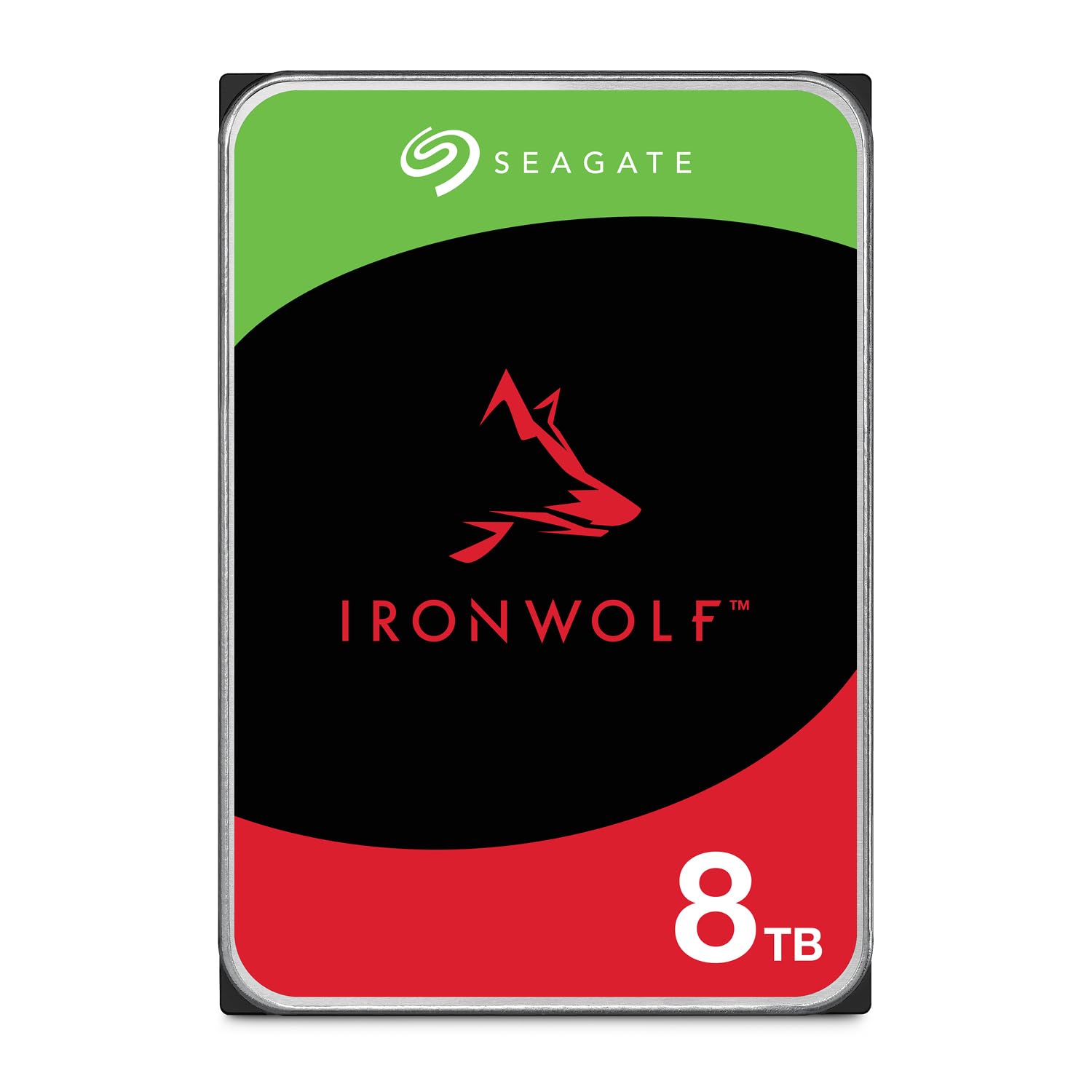
Seagate IronWolf 8TB, Internal NAS HDD, CMR, 3.5 Inch, SATA, 6GB/s, 5.400 RPM, 256MB Cache, Data Rescue Services, (ST8000VNZ02)
Our Recommendation
The Seagate IronWolf 10TB drive is the clear winner for users needing more storage and faster performance. Its higher RPM and capacity make it ideal for demanding applications and future scalability, outweighing the price difference when considering long-term benefits.
Detailed Comparison
Capacity and Storage
The Seagate IronWolf 10TB (Product A) provides a higher capacity compared to the 8TB variant (Product B). If your NAS setup is intended for large media libraries, extensive backups, or hosting virtual machines, the 10TB drive will allow you to store more data without the immediate need for additional drives. This can be particularly advantageous for users planning to scale their storage in the future.
Performance
In terms of performance, Product A has a rotational speed of 7,200 RPM compared to Product B's 5,400 RPM. The higher RPM in the 10TB model translates to better read and write speeds, making it more suitable for tasks requiring quick access, such as streaming media or handling multiple user requests simultaneously in a RAID configuration. However, both drives feature a 256MB cache, which is beneficial for buffering and speeding up data access, but the 10TB's RPM edge gives it a clear advantage here.
Build Quality and Reliability
Both drives boast Seagate’s IronWolf technology, which includes features designed for NAS environments, such as vibration tolerance and error recovery protocols. Both products have been well-reviewed, with similar ratings of 4.6/5, indicating that users find both reliable. In this aspect, there's no significant difference, making it a tie.
Price and Value for Money
Product A is priced at £339.19, while Product B is more budget-friendly at £249.00. The £90.19 difference may be justified for users needing additional storage capacity and performance. However, for home users with moderate storage needs, Product B delivers better value for money, especially considering that both drives have similar build quality and reliability features.
Overall User Experience
Considering user experience, the choice will largely depend on your specific requirements. If you are running a home server for basic use, the 8TB drive is likely sufficient. However, if you anticipate heavy usage or plan to run demanding applications, the 10TB drive's enhanced performance could provide a smoother experience.
Overall, the Seagate IronWolf 10TB is a superior option for users requiring higher capacity and better performance, while the 8TB model offers excellent value for typical home NAS usage. Both products are reliable, but your specific usage scenario will determine the best choice.
Buy the Seagate IronWolf 10TB, if...
Choose the 10TB model if you are planning to host a large media library, run virtual machines, or need a NAS that can handle multiple users and heavy workloads without compromising performance.
Buy the Seagate IronWolf 8TB, if...
Opt for the 8TB model if you have a more modest storage requirement, primarily use your NAS for basic file storage, backups, or media streaming, and wish to save on initial costs.
Curated by Home Server Hub on All The Top Picks
As an Amazon Associate we earn from qualifying purchases.